Catholic liturgy (the people’s work) is replete with history, context and a dizzying array of modes of practice spanning centuries, ideas and opinions. One aspect that we, the people whose work liturgy is, often miss is the multi-layered nature of its constituent pieces.
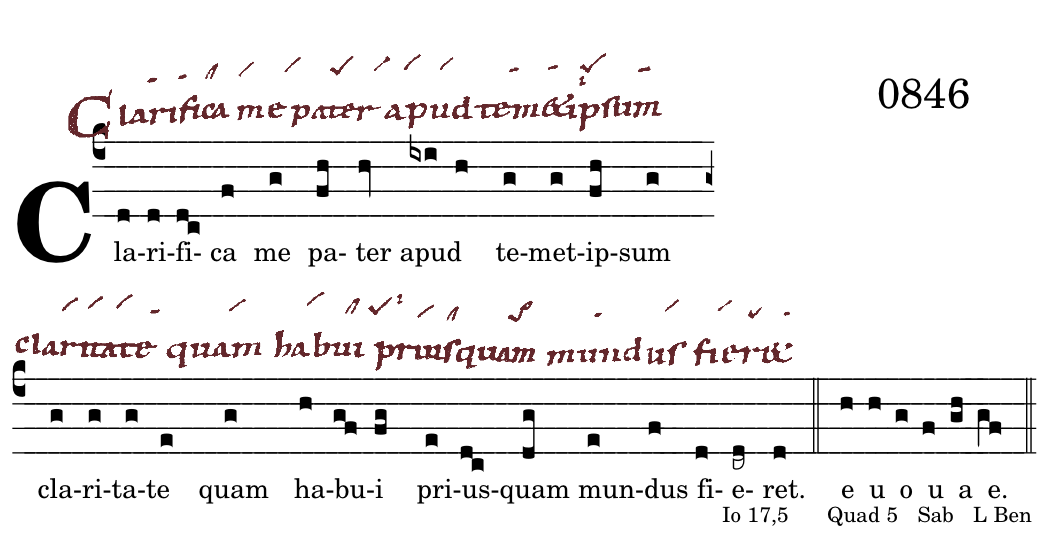
Clarifica me Pater is known to scholars as “The Sarum antiphon to the Magnificat at First Vespers on Palm Sunday.” It quotes Jesus’ own words in John 17:5, usually translated “Father, glorify me in your presence with the glory I had with you before the world began.”
I always find it fascinating when liturgy asks or directs us to presume to speak or sing Christ’s own words – but that is a topic for another time. For now, let’s consider a more practical question for the liturgy: does Clarifica me Pater’s clear designation for a liturgical moment occurring just once a year suggest it should never be sung other than with the Magnificat at First Vespers on Palm Sunday? Perhaps – depends on who you ask – but while organists are normally instructed what will be sung in a service, rarely is there any such instruction on what may be played, as ‘Voluntaries’ like Preludes and Postludes, or incidental music at points during the mass. So, “Should I play it?”
The gold standard for liturgical organ music is to connect it with the chants and hymns of the liturgy, especially on Feast Days and other special occasions – but on many Sundays this is simply impossible. Despite the venerable 10+ centuries’ age of both the organ AND Gregorian Chant they have generated relatively little dedicated written-down organ repertoire, due mainly to the continuing art and practice of improvisation.
Let’s look at the music in question, which I play in the video above. These three short Tallis settings (available for free online on the International Music Score Library Project (IMSLP)) embody the dignity and simplicity of polyphonic vocally-based keyboard writing of the high Renaissance. Even though based on a not-too-well-known chant antiphon unlikely to pop up in the day’s liturgy, they are perfectly suitable for incidental music during any Mass, or perhaps even as a set of three providing a Prelude beforehand. The settings’ simplicity lends them to playing on a variety of organ registrations and indeed more-or-less any instrument. In the video I use the Organteq software platform (by the French company Modartt running on a laptop that also displays my score) played via MIDI (Musical Instrument Digital Interface) from my very normal electronic keyboard.
Choice of organ registration in liturgical settings is driven perhaps just 10-20% by the music we choose to play, and at least 80-90% by the moment in the Mass, it’s meaning and our sense of what seems appropriate to both. Organ registrations were not ever specified by composers until well into the 18th century, and such directions were not widespread until the 20th century. Because organs vary so widely one’s own ears – and perhaps those of others – must be the judge.
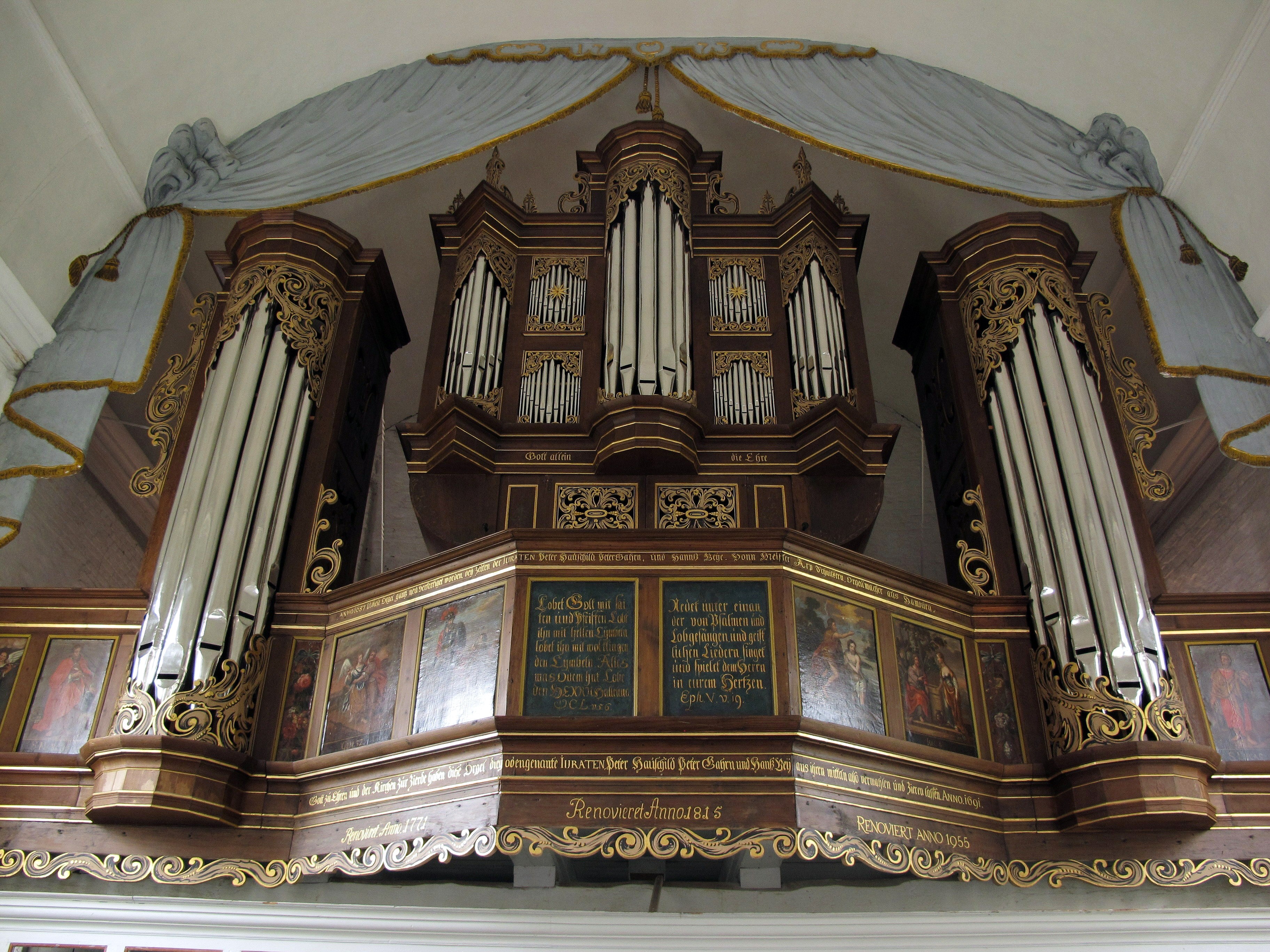
In the video performances I play CMP I on a soft registration suitable to a moment of meditation (elevation, communion), CMP II on an interesting louder trumpet stop (possibly Offertory), and CMP III on a fuller plenum-style registration (probably best before or after Mass). The Organ sounds come from a Baroque (1687) organ by the north German builder Arp Schnitger in the Kirche St. Martini et Nicolai in the town of Steinkirchen.
If you are planning to attend this year’s Catholic Choral Symposium (New Hamburg, Ontario, July 2-5) as an organ student, have a look at these three settings – I’m hoping all students will take on at least one of them, and we will delve deeply into the topics of playing technique, liturgical usage, registration, and for the brave, pedal incorporation. Why not get a head-start?
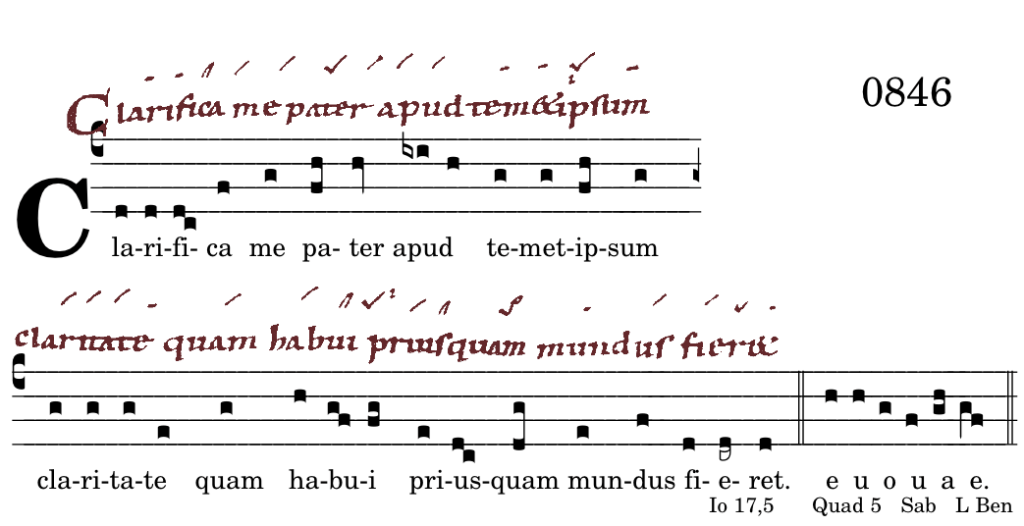
Incidentally, in case you’re wondering the unusual ‘Latin word’ at the end of the chant excerpt above, “e u a e u o e” is shorthand for the notes used to sing ‘secula seculorum’ that concludes the doxology. Fun fact, it is the longest word consisting solely of vowells of the English alphabet, and is, believe it or not, an acceptable scrabble word in the UK…
-CD


Leave a comment